

30 August – International Day of the Victims of Enforced Disappearances (Missing Persons) was established by the United Nations General Assembly (UNGA) to remember thousands of persons missing globally, unknown persons who had fallen in armed conflicts and military operations, or those arrested or murdered by concealment.
Armed conflicts emerging in various parts of the globe lead to the increasing of the number of enforced disappearances.
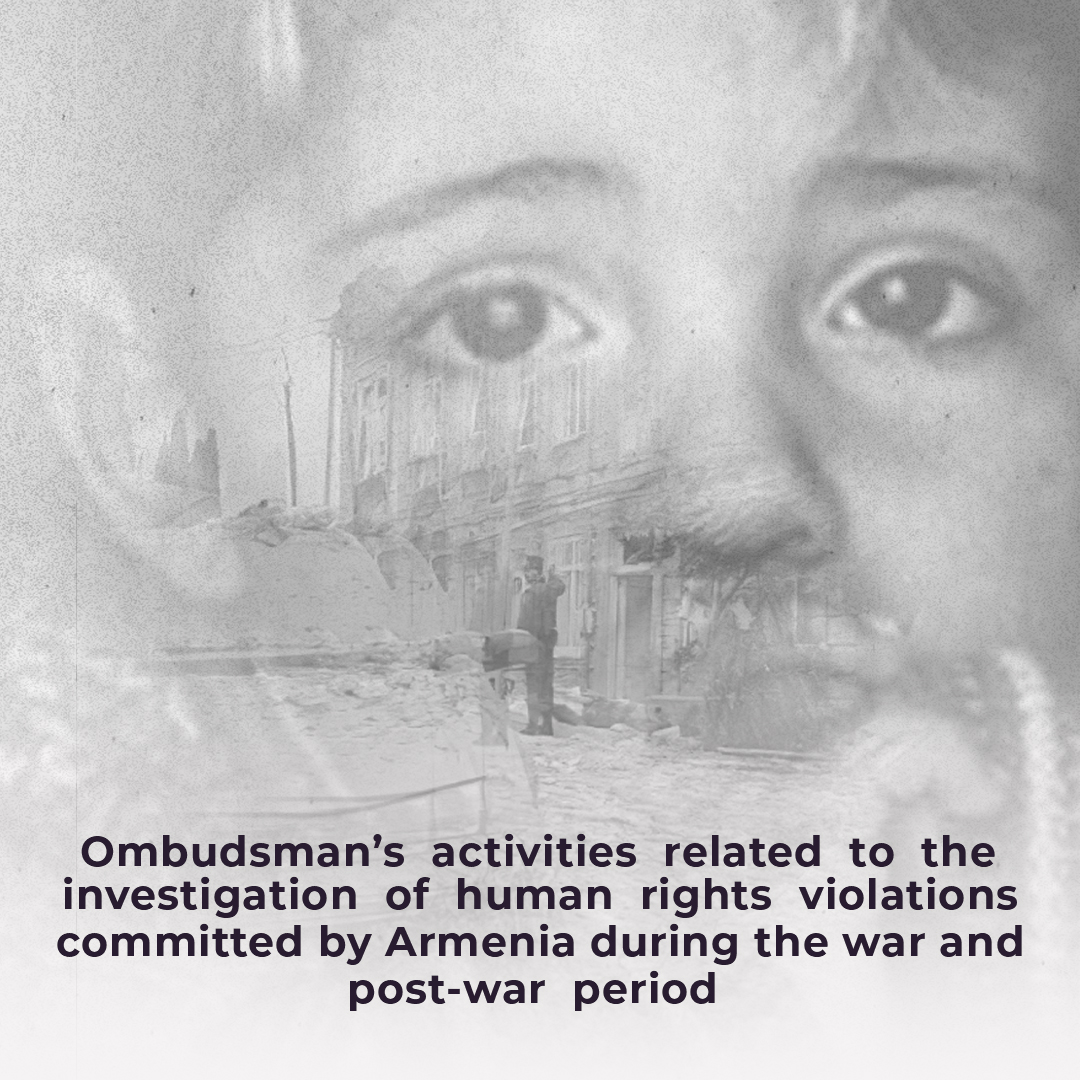
Azerbaijan, as a country facing long-term occupation, has not been able to escape from the problem concerning the missing persons. Armenia’s military aggression against Azerbaijan, which lasted thirty-years had resulted in the missing of thousands of compatriots and no information about their whereabouts so far.
According to official records, as a result of the military aggression of Armenia against Azerbaijan, about 4,000 people, of which 71 were children, 284 were women, and 316 were the elderly, have been reported as missing.
International humanitarian law (IHL) norms establish commitments for the participating states to mutually provide information about the disappeared persons. In addition, the UNGA Resolution, adopted on 6 November, 1974, recommended parties to provide information about those who are missing.
The problem of the fate of missing Azerbaijanis has been repeatedly brought by us to the attention of relevant international organizations, and Armenia has been requested to provide information about our missing compatriots in accordance with the requirements of the Geneva Conventions.
I would like to especially note that, since 2002, the State of Azerbaijan has been regularly proposing resolutions on missing persons at the UNGA. However, no practical steps have been taken to clarify the fate of our missing compatriots.
As a result of systematic search measures carried out by the State of Azerbaijan in the liberated territories as a result of the Second Karabakh War and the local anti-terrorist measures carried out in September 2023, as well as during construction and building works, as well as excavations carried out based on the testimonies of eyewitnesses, a number of mass graves were discovered. The measures taken by the relevant state bodies of Azerbaijan to identify the found human remains, and the fate of some persons missing in the First Karabakh War were clarified. Unfortunately, Armenia, failing to fulfill its obligations under the IHL, does not provide Azerbaijan with information about the exact locations of other mass graves, as a result of which family members who have not been able to hear from their relatives for many years continue to suffer.
As the Commissioner for Human Rights of the Republic of Azerbaijan, I deeply respect the memory of those who went missing due to war and other reasons, and I would like to emphasize once again that the world community and international organizations should increase their efforts to clarify the fate of nearly 4,000 of our missing compatriots, and Armenia should fulfill its international humanitarian law commitments.